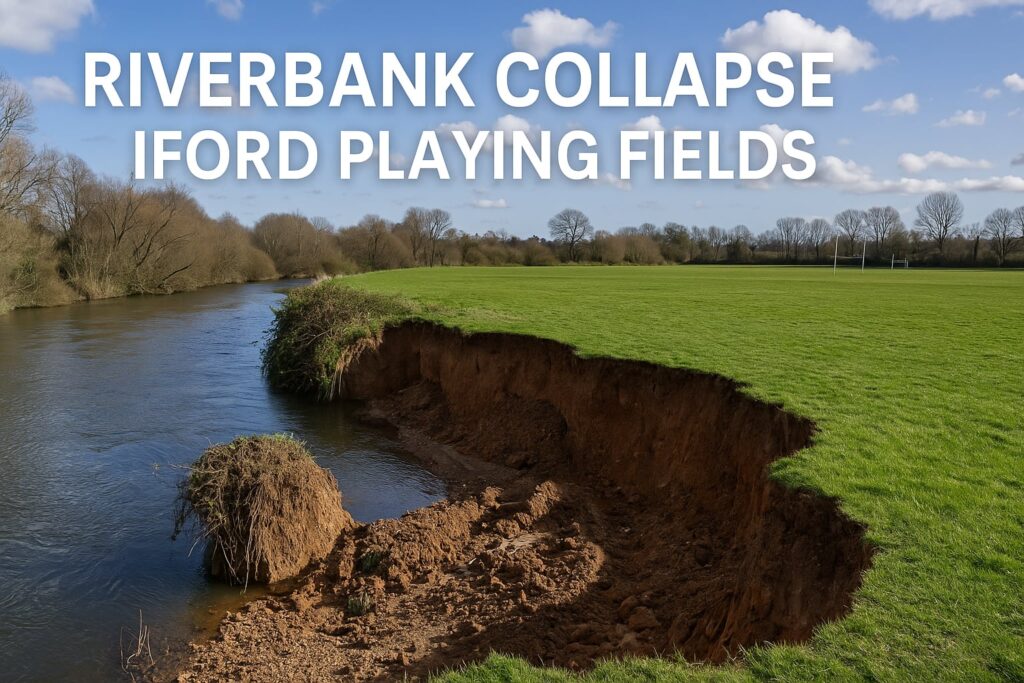

The Riverbank Collapse Iford Playing Fields incident stands as a powerful reminder of the delicate balance between nature and human use of recreational spaces. Situated alongside the River Stour near Bournemouth, the Iford Playing Fields have long served as a haven for local residents — a place where families gather, children play sports, and individuals find solace in nature. However, in recent times, this serene landscape has been disrupted by a worrying environmental event: the progressive collapse of the riverbank.
The gradual erosion and collapse along the river’s edge have not only altered the landscape but have also raised serious concerns about safety, ecological impact, and the long-term future of the area. This article delves deep into what caused the collapse, its far-reaching implications, and the potential solutions to restore and preserve this cherished local environment.
The Incident at Iford Playing Fields
The Riverbank Collapse Iford Playing Fields became apparent when sections of the ground bordering the River Stour began to crumble and slide into the water. Locals first noticed the damage after periods of heavy rainfall, when the river swelled beyond its typical flow, saturating the soil and weakening the bank’s structure.
Over time, the collapse has expanded, consuming more of the green space and posing safety risks for the public. Several walking paths and grassy areas have been cordoned off by local authorities as a precautionary measure, and signs now warn visitors to stay clear of unstable ground.
The sight of cracked soil, fallen trees, and chunks of land disappearing into the water has left residents both saddened and alarmed. For a community that deeply values its natural spaces, the riverbank’s deterioration is not merely a loss of land — it is a loss of identity and connection to nature.
Causes of the Riverbank Collapse
Understanding why the Riverbank Collapse Iford Playing Fields occurred requires examining both natural and human factors. While riverbank erosion is a natural process, the speed and scale of this collapse suggest a combination of influences that have weakened the area over time.
Climate Change and Extreme Weather
The most significant contributor is the pattern of increasingly extreme weather events in southern England. The region has experienced heavier and more frequent rainfall, leading to flooding and soil saturation. When the ground becomes overly wet, it loses cohesion, causing sections of earth to give way under their own weight.
River Flow and Natural Erosion
The River Stour’s constant flow gradually wears away at its banks. As water moves through bends in the river, it exerts lateral pressure on the soil, loosening sediment. Without vegetation or proper reinforcement, this erosion becomes more pronounced, especially during flood surges.
Human Activities
The popularity of Iford Playing Fields has also played a role. Regular mowing, trimming of riverbank vegetation, and heavy foot traffic compact the soil, making it less absorbent and less stable. In some cases, drainage modifications or nearby construction can also alter water movement, further destabilizing the riverbank.
Lack of Preventive Infrastructure
Lastly, there has been a lack of long-term investment in riverbank stabilization infrastructure. While the area is loved by the community, limited funding and focus on preventive environmental engineering have left it vulnerable to natural forces.
The Environmental and Community Impact
The Riverbank Collapse Iford Playing Fields is not only a matter of lost ground; its effects ripple through both ecological and human systems.
Safety Concerns
Public safety is a primary concern. The unpredictable collapse zones mean that visitors risk injury if they walk too close to the river’s edge. Authorities have placed barriers, but many sections remain vulnerable, particularly after rainfall.
Loss of Recreational Space
Iford Playing Fields is one of Bournemouth’s most valued open spaces. With sections of the park now unsafe or off-limits, the community has lost vital areas for walking, playing, and gathering. Local sports teams and families who frequent the fields have had to adjust their routines, underscoring the social cost of environmental neglect.
Ecological Damage
The collapse has direct consequences for the river’s ecosystem. Soil erosion increases sediment levels in the water, reducing clarity and oxygenation. This harms fish populations, aquatic plants, and invertebrates. Moreover, the loss of riverbank vegetation deprives birds and small mammals of habitat, further disrupting local biodiversity.
Long-Term Economic Costs
Repairing and stabilizing riverbanks is an expensive process. Local councils and environmental agencies must allocate significant resources for restoration efforts. Without timely intervention, costs could escalate, making long-term solutions even harder to implement.
Community Reactions and Calls for Action
The Riverbank Collapse Iford Playing Fields has prompted strong reactions from the local community. Residents have voiced concerns on social media platforms, sharing images of the damaged areas and urging the Bournemouth, Christchurch and Poole (BCP) Council to take immediate action.
Many residents feel that the issue reflects a broader problem: the underfunding of natural infrastructure and the lack of proactive environmental management. Community groups have begun organizing volunteer cleanups, awareness campaigns, and petitions calling for eco-friendly restoration efforts.
Some environmentalists emphasize that restoring the riverbank should not rely solely on artificial reinforcements. Instead, they advocate for nature-based solutions, such as planting deep-rooted native vegetation and using biodegradable materials to stabilize the soil. This approach can both strengthen the riverbank and promote biodiversity.
Potential Solutions and Future Steps
To prevent further Riverbank Collapse Iford Playing Fields incidents, experts recommend a combination of engineering and ecological measures designed to restore stability while preserving the natural character of the site.
Bioengineering Techniques
Eco-engineering or “soft engineering” methods offer sustainable solutions for riverbank stabilization. These include willow spiling, coir matting, and live staking — techniques that use living plant materials to hold the soil together naturally.
Reinforcement Structures
In areas of severe collapse, structural support may be necessary. Gabion baskets, revetments, or timber piling can protect the most vulnerable zones from further erosion, especially during high-flow periods.
Vegetation Restoration
Planting native grasses, reeds, and shrubs along the riverbank is one of the most effective long-term strategies. These plants develop strong root systems that anchor the soil, absorb excess water, and provide shelter for wildlife.
Regular Monitoring
Implementing regular inspections and geotechnical assessments can help detect early warning signs of further collapse. This proactive approach allows authorities to act before erosion becomes dangerous.
Public Education and Cooperation
Lastly, community involvement is key. Educating visitors about staying clear of unstable areas, avoiding littering, and respecting natural vegetation helps reduce human-induced stress on the landscape. Local schools and environmental organizations can also play a role in promoting stewardship of the area.
A Broader Lesson on Climate Resilience
The Riverbank Collapse Iford Playing Fields reflects a challenge faced by communities across the UK: how to maintain and protect natural spaces in the face of a changing climate. Rising rainfall levels, increased flooding, and more extreme weather patterns are testing the resilience of local ecosystems.
This event serves as a lesson in environmental accountability. Governments, local councils, and residents must work hand in hand to adopt forward-thinking strategies that balance recreation, safety, and sustainability. Investing in green infrastructure today is not just about preserving a field — it is about ensuring the environmental security of future generations.
Conclusion
The Riverbank Collapse Iford Playing Fields is more than an isolated environmental event — it is a symbol of the broader struggle between human activity and nature’s limits. What began as a local incident has become a wake-up call for greater environmental awareness and proactive management.
Through careful restoration, community involvement, and sustainable planning, the area can recover and once again serve as a thriving example of harmony between people and the natural world. If addressed with foresight, this incident could mark the beginning of a new era for Iford — one where green spaces are not only enjoyed but also respected, protected, and nurtured.
The collapse at Iford reminds us all of one undeniable truth: nature, when neglected, will always reclaim its space — and it is our collective responsibility to work with it, not against it.