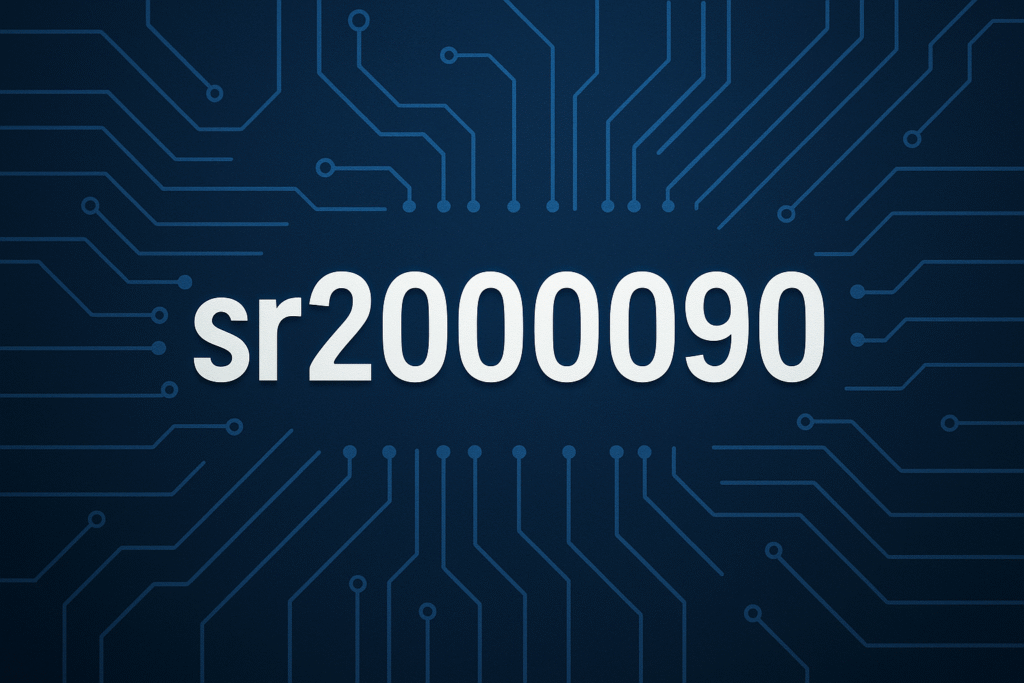

The alphanumeric code sr2000090 may appear simple on the surface, yet within many digital and organizational systems, it represents something significantly more meaningful. In an era defined by automation, digital transformation, and data-driven operations, identifiers like sr2000090 serve as essential components in tracking, categorizing, and interpreting information. Whether used in technological platforms, product databases, research environments, or internal organizational documentation, sr2000090 highlights the growing importance of structured digital classification.
Identifiers are the building blocks of organization in modern digital ecosystems. They keep processes aligned, ensure that information is easily retrievable, and allow complex systems to operate without confusion. sr2000090 is a strong example of how a single code can carry operational value far beyond its appearance. It symbolizes order in environments where millions of entries need separation, clarity, and precision.
Understanding the Composition of sr2000090
Every part of sr2000090 contributes to its identity. The prefix “sr” may stand for system reference, service record, serial registration, or another meaningful indicator depending on the environment in which it is deployed. Prefixes are often used to group identifiers into categories, making it easier to distinguish different types of information. The numeric sequence “2000090” creates the uniqueness that ensures this identifier can never be confused with another entry in a database or system.
This combination of letters and numbers is typical of identifiers used in enterprise software, supply chain systems, research datasets, and product indexing platforms. The sequence gives sr2000090 a fixed position within a system, allowing it to be referenced repeatedly without losing meaning. Such formats are intentionally designed to prevent errors and maintain a consistent structure that both humans and machines can interpret with ease.
How sr2000090 Fits into Technological Systems
Within modern technological systems, sr2000090 could be used in a wide range of roles. One of the most common applications is within software development environments. Developers often assign unique codes to updates, patch notes, internal tasks, or modules. An identifier like sr2000090 may represent a specific code segment or internal modification that helps track changes over time.
In addition to software applications, sr2000090 could function within digital asset management platforms. Businesses today handle large volumes of digital files, and without identifiers, these files would quickly become unmanageable. By assigning something like sr2000090 to each document, image, or digital item, companies ensure the right asset can be found instantly when needed.
In cloud technologies and distributed computing environments, identifiers like sr2000090 become even more important. They help track logs, synchronize nodes, monitor system behaviors, and maintain consistency across networks. Every action, device, or service may be connected to such an identifier, making sr2000090 part of the invisible framework that keeps digital infrastructure running efficiently.
Role of sr2000090 in Data Management
Effective data management depends on the ability to differentiate and categorize information. sr2000090 can serve as a unique data point within a large dataset, providing structure that makes analytics and referencing far more efficient. Data scientists and analysts rely heavily on identifiers to segment, sort, and interpret data trends.
When sr2000090 is part of a database, it may represent a customer profile, a transaction entry, a product specification, or a research record. In each case, its purpose is to create a layer of organization that prevents duplication, ensures accuracy, and improves accessibility. Without identifiers, data would lose its contextual relevance and become unreliable.
As artificial intelligence and machine learning systems continue to expand, the need for structured data grows stronger. Unique identifiers like sr2000090 give models the clarity they need to understand relationships, patterns, and outcomes. Every properly labeled entry supports the performance of AI-driven solutions and enhances their predictive capabilities.
Industrial and Manufacturing Applications of sr2000090
In industrial environments, sr2000090 may be tied to a machine part, manufacturing batch, or internal process step. Manufacturing relies heavily on traceability, and identifiers are the backbone of that traceability. Whether it is tracking the origin of a part, monitoring the lifespan of a tool, or managing quality control processes, identifiers simplify the entire workflow.
By assigning sr2000090 to a specific component, companies can trace its history from production to deployment. This is especially valuable in industries that require rigorous compliance, such as automotive, aerospace, and pharmaceutical manufacturing. If an issue arises, identifiers make it possible to pinpoint the exact source and implement solutions quickly.
Beyond physical components, sr2000090 may also represent digital blueprints, maintenance logs, or certification documents. Each connection strengthens the relationship between physical systems and digital records, creating a unified operational environment.
sr2000090 and Its Importance in Automation
Automation thrives on precision, and precision relies on identifiers. sr2000090 might be used to trigger automated tasks, label workflow processes, or identify items within robotic systems. Automation tools often require consistent references to complete tasks correctly, and the lack of proper identifiers can lead to costly errors.
When sr2000090 is used in automation systems, it may serve as a task ID, a process checkpoint, or a machine instruction code. Automation tools can read such identifiers, execute the corresponding action, and record the results. This creates a continuous cycle of efficiency supported by structured labeling.
Automation is expanding into industries such as logistics, finance, healthcare, and manufacturing. As these industries evolve, identifiers like sr2000090 will continue to support workflow clarity and operational stability.
The Future Relevance of sr2000090
As digital ecosystems grow more complex, identifiers like sr2000090 will become even more essential. Their roles will expand into future-facing technologies such as blockchain, digital identity systems, and smart devices. Blockchain applications especially require unique identification for entries, and sr2000090 fits the model of a trackable, verifiable reference.
The Internet of Things (IoT) is another environment where sr2000090 could play a major role. IoT devices generate vast amounts of data, and without identifiers to label each output, managing these streams would be impossible. Whether tied to sensors, analytics tools, or device health logs, sr2000090 could serve as a key linking element.
In the future, organizations will continue to depend on structured identifiers to maintain order and accuracy. sr2000090 represents the kind of coded reference that can grow and adapt alongside advanced technologies.
Conclusion
The identifier sr2000090 is more than a random combination of letters and numbers. It represents a modern approach to digital structure, precision, and organization. From technology and data management to industrial operations and automation, sr2000090 has potential applications across numerous fields. Its importance lies in its ability to bring clarity to complex systems, traceability to vast datasets, and support to evolving digital environments.
As technology continues to advance, identifiers like sr2000090 will remain foundational tools for maintaining control, consistency, and efficiency. In a world driven by data and automation, sr2000090 stands as a symbol of structured progress and digital reliability.