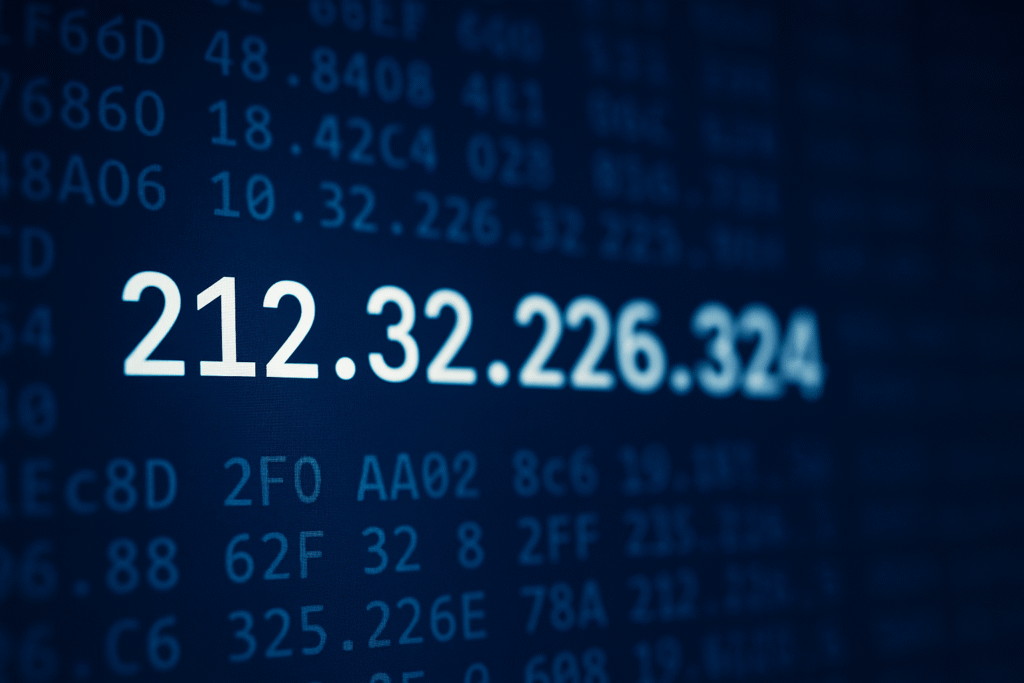

In today’s digital landscape, understanding numerical identifiers that resemble IP addresses is essential for anyone interacting with online systems, analytics, or technical infrastructure. One such identifier that often appears in search queries, logs, or configuration files is 212.32.226.324. Although it may look like a standard IP address, its structure, purpose, and appearance often raise questions for users trying to interpret its meaning. Exploring this sequence provides a deeper understanding of how network addressing works, why certain patterns appear in digital systems, and how to interpret data that resembles technical identifiers.
What Makes 212.32.226.324 Stand Out
The number 212.32.226.324 is written in a format that resembles an IPv4 address. IPv4 addresses use four number blocks separated by periods, each ranging from 0 to 255. This makes it possible to assign unique identifiers to billions of devices across the world. However, the number “324” in the last block of 212.32.226.324 exceeds the maximum limit for a valid IPv4 address. This makes 212.32.226.324 an invalid IP address, despite being structured like one.
The presence of this pattern in user queries or software logs often indicates a deeper issue to explore. It might be a result of a typographical mistake, an internal placeholder, or an attempt by automated systems to generate network patterns without validation.
Why Do Users Search for 212.32.226.324
There are many scenarios in which a user might encounter or search for 212.32.226.324, and each scenario reveals a different dimension of digital behavior. In everyday technical environments, one of the most common reasons is simply mistyping an actual IP address. Because IP addresses often contain similar sequences of numbers, a user may accidentally replace one digit, creating a sequence that appears valid but exceeds technical constraints.
Another reason involves software testing or simulations. Engineers often input incorrect or invalid values intentionally to test how systems respond to malformed addresses. Such tests help ensure software behaves correctly when encountering unexpected input.
In cybersecurity, strange or invalid IP-like numbers sometimes appear in scans conducted by bots or malicious scripts. These tools often generate massive lists of possible addresses, without validating each one. As a result, invalid addresses like 212.32.226.324 occasionally appear in firewall logs or intrusion detection reports.
Educational materials, tutorials, and documentation also frequently use IP-like numbers that are intentionally invalid. This prevents unintended interference with real servers when students or readers practice commands, demonstrations, or configurations.
How IP Addresses Work and Why Validity Matters
To understand why 212.32.226.324 is invalid, it helps to understand how IP addresses function in global networking. IPv4, one of the most widely used protocols, allocates addresses using four decimal numbers, each representing eight bits. These numbers range from 0 to 255.
A valid IPv4 address might look like:
192.168.0.1
10.0.5.45
212.32.226.32
Every device connected to the internet needs an IP address to send and receive data. Without proper addressing, routers and servers would not know where to deliver information, making seamless communication impossible.
Because the last block of 212.32.226.324 exceeds the allowed range, routers and systems reject it. This ensures stability and prevents misrouting of data. When malformed addresses appear, they can cause errors or be interpreted as signs of incorrect configuration or malicious probing.
Technical Situations Where 212.32.226.324 Might Appear
Even though it is not a functional address, 212.32.226.324 can appear in numerous settings. Developers might encounter it in configuration files or test scripts designed to simulate broken network conditions. Network administrators may see it within automated scanning logs where tools attempt to detect vulnerabilities by generating random patterns.
Software that scrapes or logs network traffic without validation may also record malformed addresses. In these cases, the invalid form helps analysts distinguish between legitimate user traffic and machine-generated sequences.
Internal systems, especially in large organizations, sometimes use IP-like numbers for indexing or identification. These numbers may resemble real IP addresses but do not follow global standards because they never interact with the public internet.
How to Interpret 212.32.226.324 in Real-World Logs
When 212.32.226.324 appears in diagnostics or logs, it usually indicates one of the following situations. It may signal that a user or device made a mistake, possibly entering the wrong address during configuration. It could be a sign that an automated bot attempted a connection without verifying address ranges. It might also reflect a malfunction or misconfiguration in software that improperly formats its output.
In all these cases, identifying the number as an invalid address helps clarify whether the issue stems from human error, automation, or a deeper system flaw.
The Importance of Detecting Invalid or Unusual IP Patterns
Recognizing that 212.32.226.324 is invalid may seem simple, but it can provide significant insight during technical investigations. When engineers review traffic patterns, anomaly detection becomes essential for maintaining security. Invalid IPs often appear during cyberattacks because poorly designed scripts generate addresses without proper validation. These malformed attempts can help analysts identify botnet behavior, intrusion attempts, or broad-spectrum scanning.
In quality assurance, invalid addresses test whether software correctly handles unexpected input. Systems must reject malformed IPs and display meaningful error messages rather than failing silently. This ensures reliability, especially for platforms handling large-scale traffic.
Understanding the Digital Context of 212.32.226.324
Even though 212.32.226.324 does not function on the public internet, its structure reflects important aspects of how digital communication works. The mere appearance of an IP-like sequence often signals data flow, connection attempts, system scanning, or testing procedures. Understanding such numbers allows both professionals and casual users to interpret technical environments more confidently.
In online discussions, numerical sequences sometimes take on symbolic meaning in debugging examples or documentation. The presence of numbers outside valid ranges can also emphasize the need for strict data validation, both for security and performance.
Could 212.32.226.324 Be Used in Offline or Custom Systems
Although invalid for external networking, 212.32.226.324 might still have meaning in a controlled environment. Internal applications may use structured numbers for indexing or categorization even if they do not meet traditional IP standards. Simulation software, for instance, frequently employs values outside real-world ranges to push systems to their limits. In data visualization tools, such numbers can serve as synthetic inputs for training models or testing how systems handle irregular data patterns.
Conclusion
The number 212.32.226.324 may not be a valid IP address, but its structure makes it an intriguing element of digital analysis. Whether encountered due to human error, automated scanning, educational examples, or simulation testing, understanding its context helps users interpret the modern internet more effectively. Numbers like this provide insight into how networks operate, how cybersecurity systems respond to anomalies, and how software processes data.
By recognizing the boundaries of valid IP formats and understanding why invalid ones appear, users gain a deeper appreciation of digital communication. The sequence 212.32.226.324 serves as a reminder that even seemingly random data can lead to meaningful learning about technology, networks, and the systems that power our connected world.