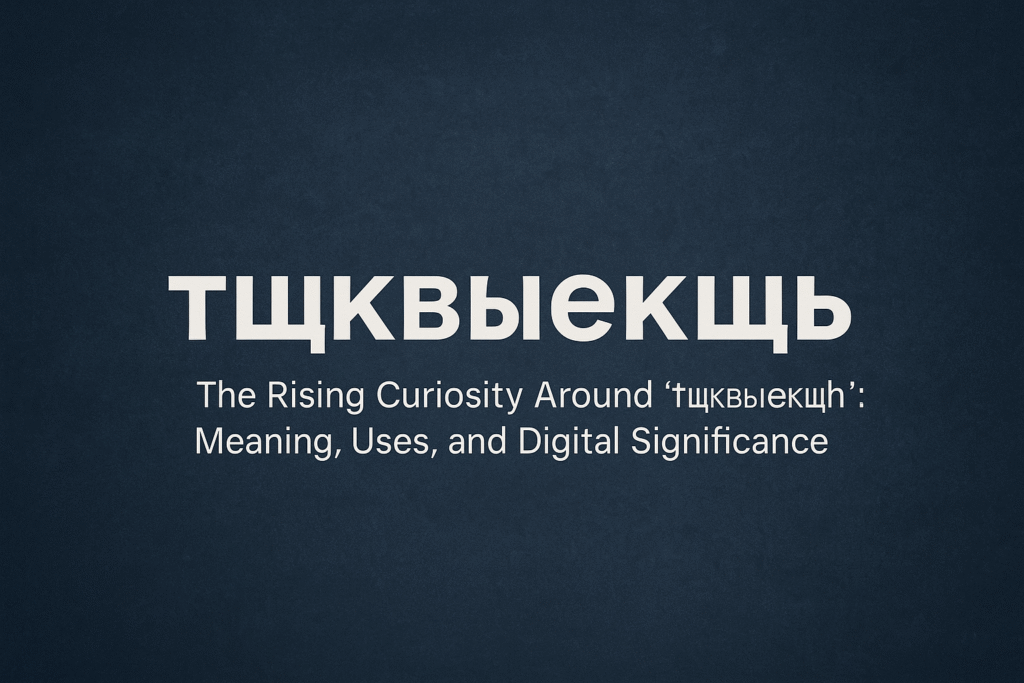

In the fast-paced digital world, unusual keywords often capture attention, spark curiosity, and raise questions. One such term currently appearing in online searches and discussions is “тщквыекщь.” At first glance, this keyword looks mysterious, unique, and difficult to interpret. Because of its structure, many users wonder whether it represents a coded term, a brand concept, a keyboard-layout typo, or even an online identity. This article explores the phenomenon of “тщквыекщь”—its possible origins, its potential uses, and why such unusual keywords matter in modern digital culture.
What Is “тщквыекщь”?
The keyword “тщквыекщь” does not have a direct translation in English or Russian and does not belong to any known dictionary. Its structure suggests that it may have been produced by typing in the Russian keyboard layout while intending an English word. This phenomenon is common when users accidentally switch keyboard languages.
Despite the uncertainty around its original meaning, the keyword has become notable because of its uniqueness. In online ecosystems where competition for visibility is high, unusual strings like “тщквыекщь” stand out and can evolve into digital identifiers, hashtags, or branding opportunities.
Why Unique Keywords Like “тщквыекщь” Gain Attention
Uniqueness and Search Dominance
A distinctive keyword such as “тщквыекщь” has no competitors in search engines. This means content created around it can easily rank first, making it useful for niche branding or SEO experiments.
Curiosity-Driven Traffic
People are naturally curious. When they encounter an unfamiliar term like “тщквыекщь,” they search for its meaning. This creates an opportunity for creators, bloggers, and brands to attract attention by providing explanations or original content.
Digital Identity
Some internet users adopt unique words as usernames or profile identifiers. Because “тщквыекщь” is practically unused, it could represent a strong and recognizable digital identity.
Potential Interpretations of “тщквыекщь”
1. A Keyboard-Layout Mistake
When switching between English and Russian layouts, the English word “textbox” typed incorrectly might result in an unintended string like “тщквыекщь.” Although not exact, this concept helps explain how unique terms can form.
2. A Secret Code or Placeholder
Creators sometimes use random strings as placeholders in drafts, codes, or example files. Over time, some of these terms gain meaning simply through repetition.
3. A Brand or Creative Concept
Because of its originality, “тщквыекщь” can be reimagined into a brand name, artistic concept, or story element. Unique, unclaimed keywords give storytellers and entrepreneurs creative freedom.
How “тщквыекщь” Can Be Used
In Branding
A distinct, mysterious name attracts attention. Brands often choose unconventional names to stand out—consider how unique names in tech, music, or fashion become memorable identities.
In Digital Content
Writers can build entire stories, concepts, or characters around unusual keywords. “тщквыекщь” could become the name of a fictional world, a username, or a symbolic theme.
In SEO Strategy
Since no mainstream content exists around the term, articles and pages using the keyword “тщквыекщь” can quickly dominate search results.
Why the Keyword Matters in Today’s Internet
The digital landscape rewards uniqueness. While common words are heavily saturated, terms like “тщквыекщь” offer clarity, exclusivity, and branding potential. In a world where millions of websites compete for visibility, a rare keyword can cut through the noise.
Moreover, unusual keywords demonstrate how dynamic the internet is. People create new digital identities, experiment with unknown terms, and repurpose mistakes into meaningful symbols.
Conclusion
The keyword “тщквыекщь” may have uncertain origins, but its uniqueness gives it potential value. Whether it began as a keyboard typo, a random string, or an intentional creation, it now stands as a distinct digital marker. In SEO, branding, creativity, and online identity, such one-of-a-kind terms can be powerful tools.
As digital culture continues to evolve, keywords like “тщквыекщь” remind us that meaning is not always fixed—it is created, shaped, and redefined by the people who use it.